SCHOLARSHIP STORIES
I’ve considered several different creative paths over the last few years, even so far as thinking about applying for a scholarship to learn to sew clothing last year… I’m thankful that didn’t go anywhere, because when I picked up a swivel knife and started to teach myself to tool, I knew I was hooked solid, and this was the one. Learning to tool leather felt like the creative pursuit that I had been looking for my whole life, and now I’ve found it.
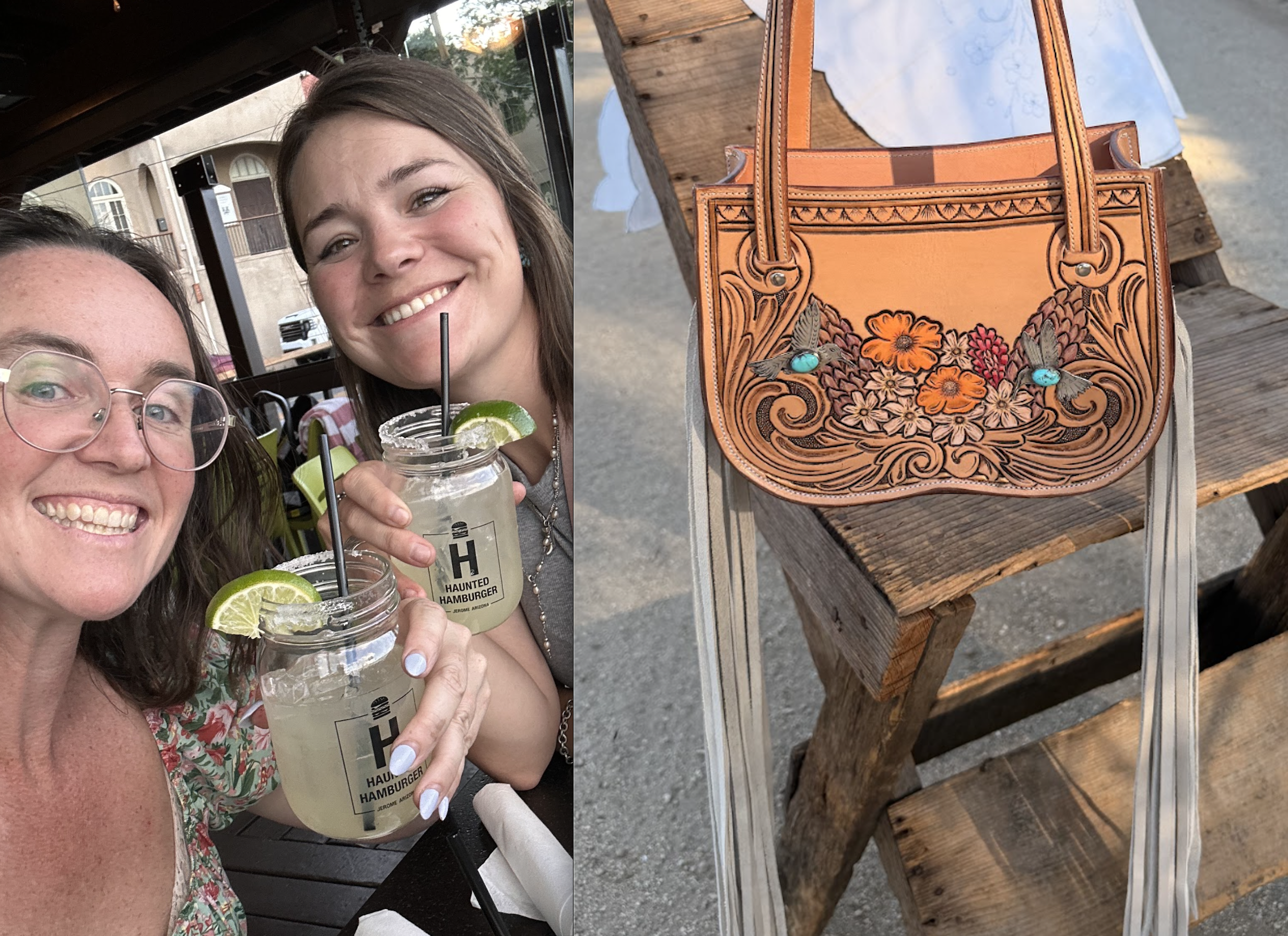
I have followed Sarah of Western Skies Handmade for years, and when I was trying to learn how to sketch, I often copied down her pieces (along with many others) to learn how to make things flow, what details I liked and didn’t like. It was comical showing her my sketchbook during my week with her, because there are some easily identifiable WSH sketches worked out in there… When I heard that one of last year’s recipients spent 5 days with her, I immediately started talking with both of them, and obviously it was a perfect fit. Sarah laid out a few topics, including color theory and design stuff, and the week evolved into a tailored learning experience that really worked for how my brain works.
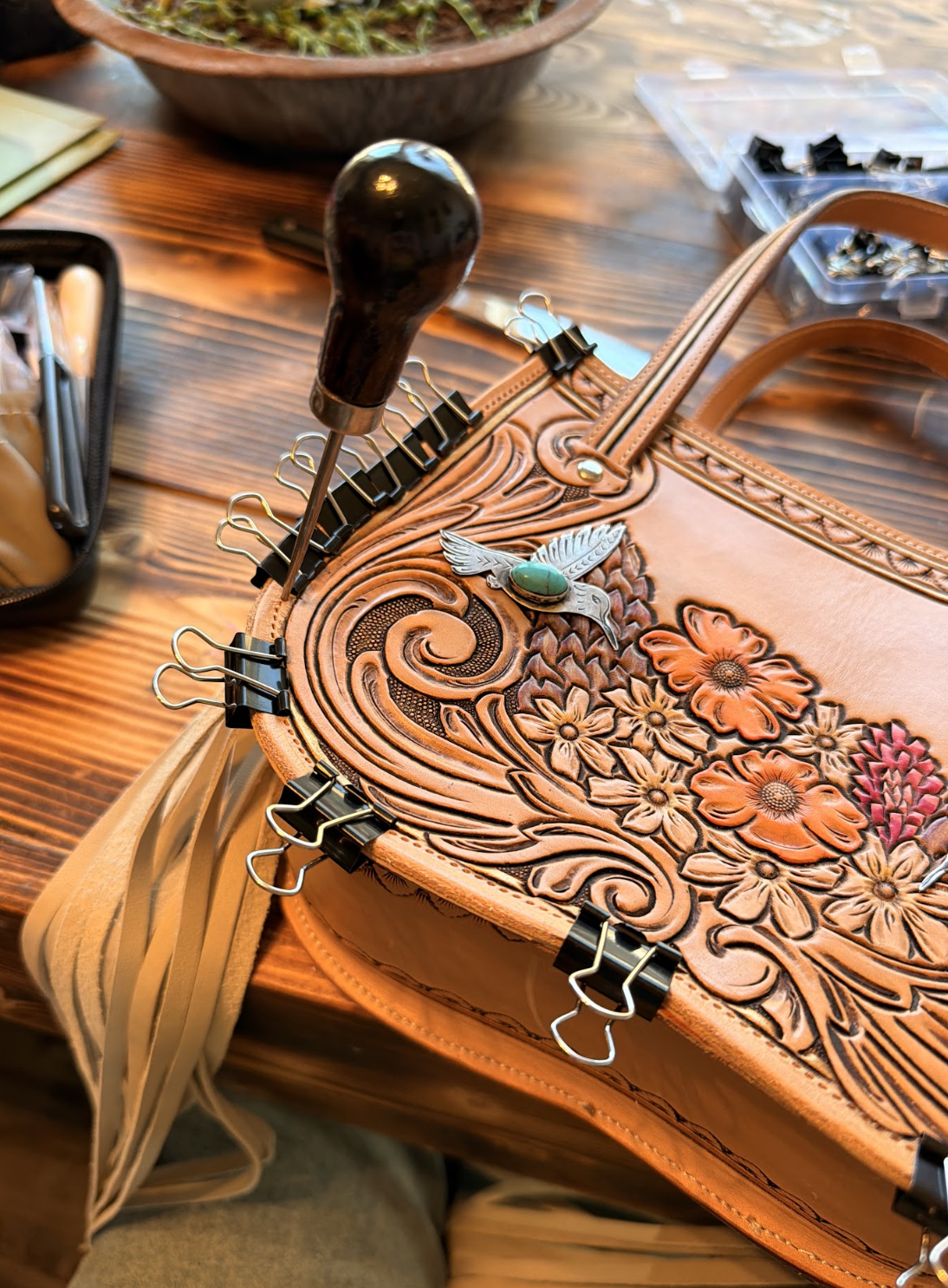
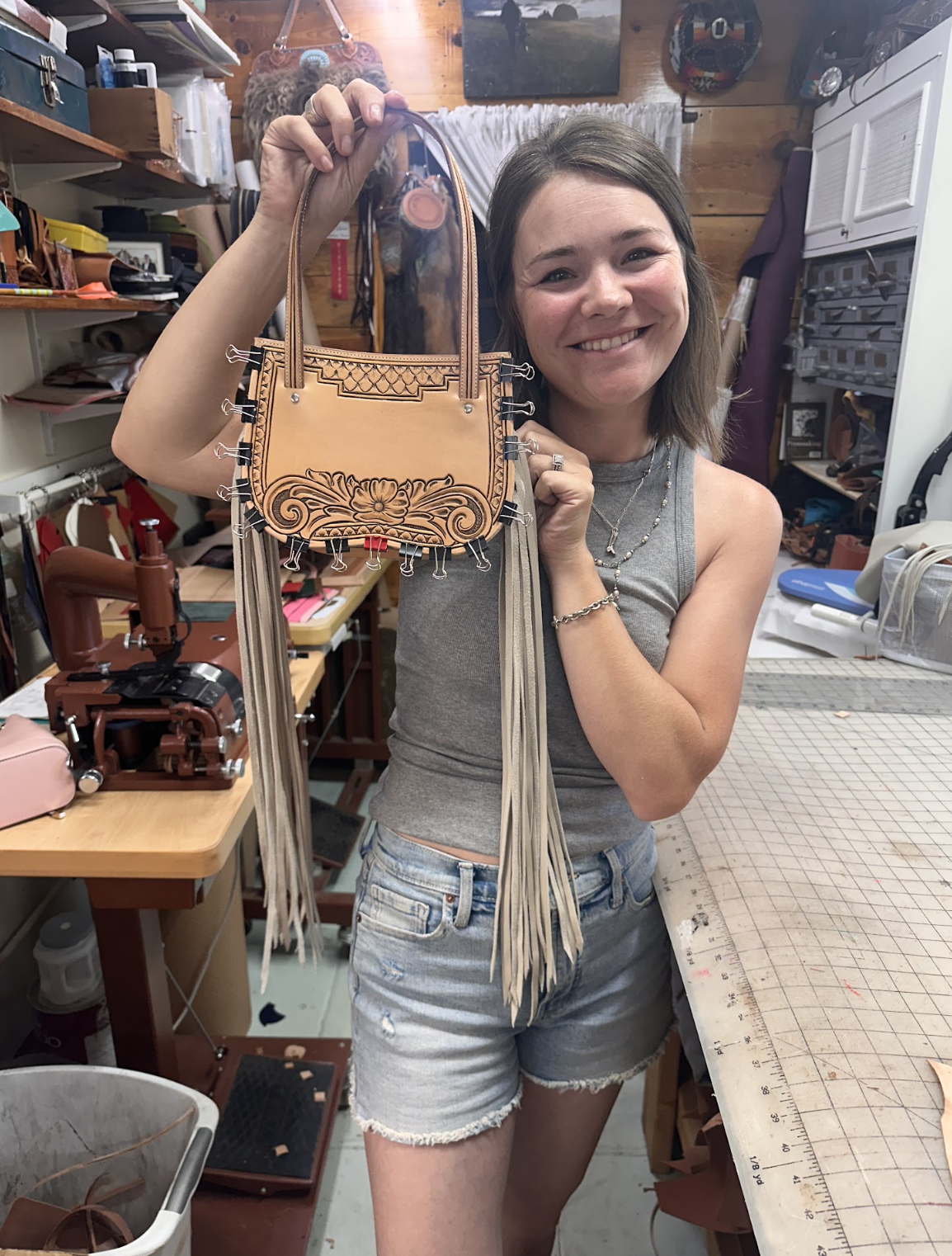
I spent 5 long (but not long enough) days in the studio with Sarah covering the fundamentals of tooling, design and a crash course in construction of a purse… That project should be called the “unrealistic expectations” purse, but we got so much done, and I learn best by doing, so more lessons stuck through the process than may have with another route through the week. We spent the first two days covering the fundamentals, right down to the angles, then jumped right in to building and spent 3 very full days working our way through building a purse.
ABBY CHANLEY’S STORY
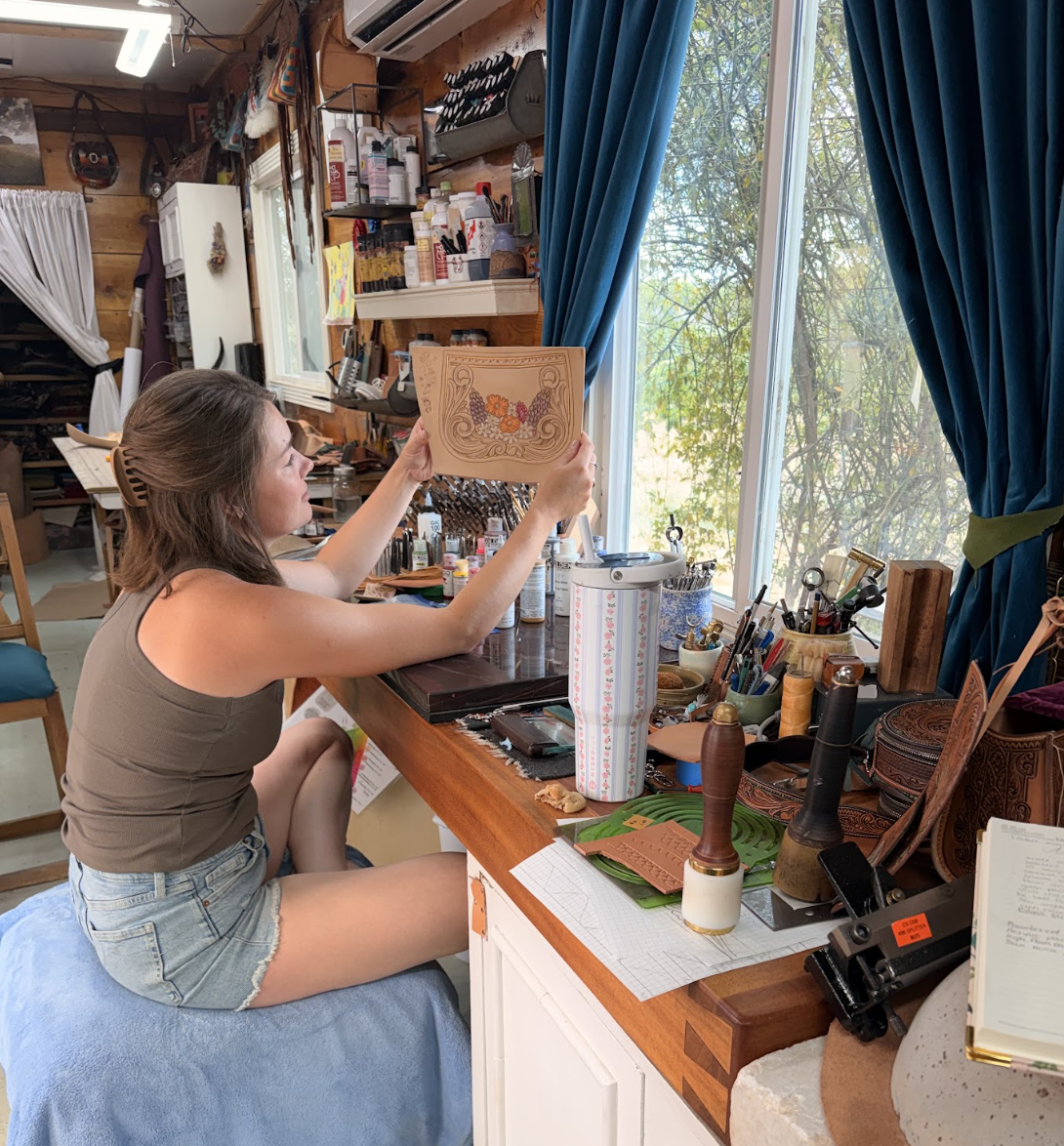
The entire week was chock-full of lessons that I took extensive notes on, but many of those lessons boiled down to paying attention to EVERY fine detail and being willing to put in the work to perfect those. Thinking of the things that other makers may skim over for the sake of time or difficulty and executing them as a top priority. Many of those details are ones that I’ve considered in my work pre-workshop, but didn’t have the knowledge, skills or tools to execute… I left with more knowledge, more skills, and an extensive wish list of tools and machines.
I’ve always been inspired by the works of other makers in many other areas of western art, including leather, as are many artists. I learned a lot from how Sarah seeks inspiration from areas of art that I would not have previously considered. Experimenting with color is new to me, and she equipped me with knowledge & resources on color theory that I think will really change the game for me. I think my “aha” moment was realizing that I can make ART. I can pay attention to details, shapes, depth, texture, and make something that’s heirloom quality, something I can be very proud of, something that’s not just a purse or head stall or whatever variety of functional leather work, something that’s art.
Since I got home, I’ve seen the need to slow down. My desire now is to take the time to learn to draft patterns, to make sure my space is conducive to creativity and construction, and that my tool collection allows me to create to the level my brain can conceive. My experience didn’t change the trajectory of my goals, but it certainly clarified them… My standards for my own work were raised dramatically, now knowing the details I’ve been missing. Holding yourself and your work up to someone who is much farther along than you can be unhealthy, done in the wrong way, but I think can also push you on to reach a higher potential than you would have without that knowledge. Sarah taught me some guidelines to critique my own work and others’ work, so I can flesh out some of the opinions I already have with legitimate reasons, not to tear anything down, but to bold up what’s going on inside my head and make what’s coming out of my hands better because of the little details. The roundness of scrollwork, the simplicity of perfectly angled detail cuts, the shades of color and making sure the foundation of those colors is leather and not white paper or canvas, and a hundred other tiny considerations that elevate your work from the level of your peers. In the next 2-5 years, I see myself constantly perfecting my craft and making sure it’s quality art that can be handed down for generations.
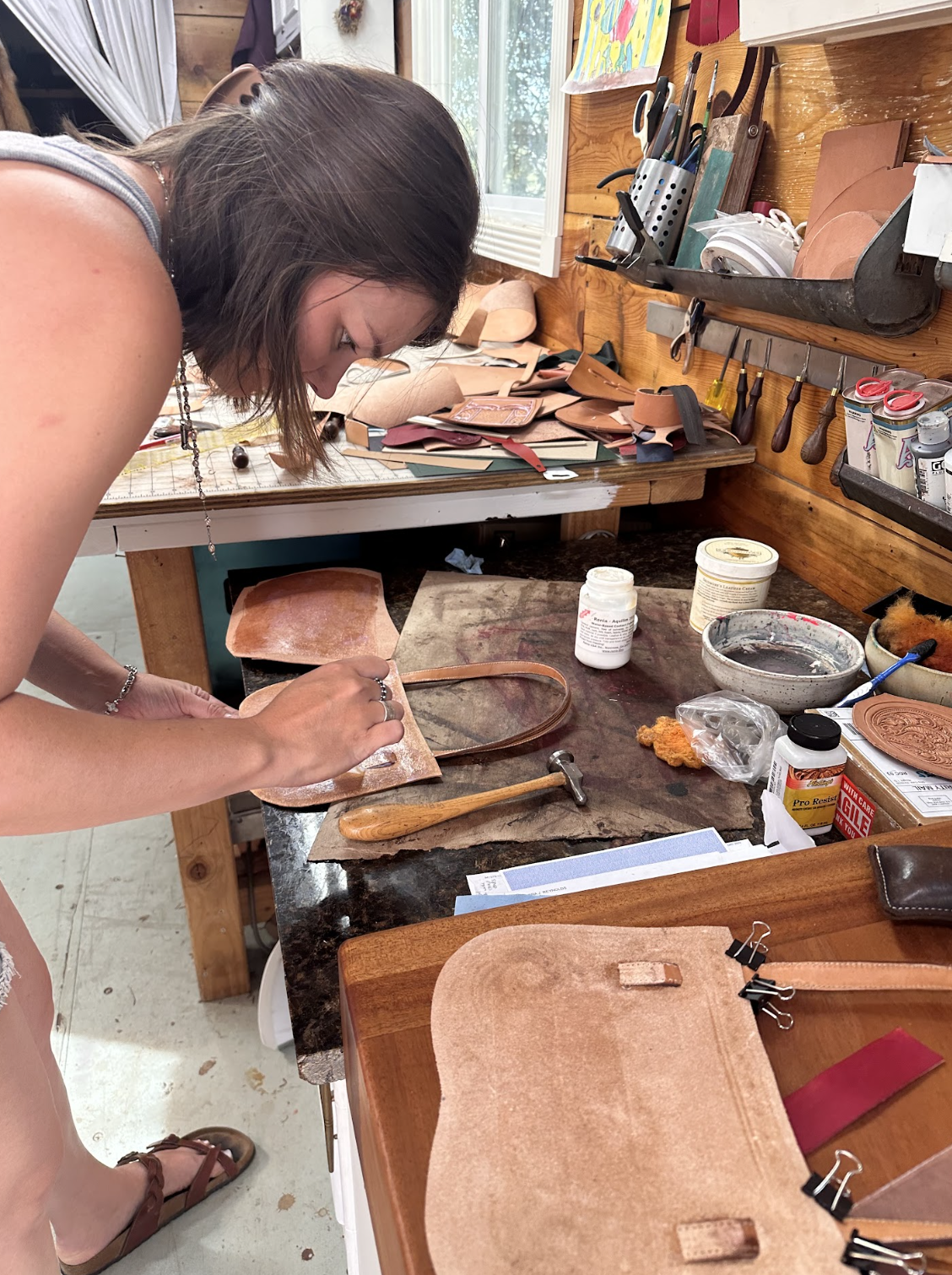
The Sallie Knowles Joseph Scholarship provided the opportunity to elevate my work and provided years of experience, rerouted me around so much trial and error, and answered questions I didn’t know I had. I would never have been able to make the trip to Arizona without the help of the generous donors to and participants in The Rodear. I’m incredibly excited about the future of my art after this week spent with Sarah, and optimistic that what I learned from her will deeply impact how I consider art in the real world, the practicality of my designs, and building a wide vision for each piece before the leather is ever even cut to shape. The Rodear didn’t change the path I was on, but it put me in a race car instead of a covered wagon and gave me a wider lens to look through at all that I have been doing and hope to do in the future. As I move forward, I’m excited to figure out the things I only have a surface knowledge of, find those that appreciate fine art in practical gear and special occasion pieces, and also find my niche within those areas that sets me apart as a designer. I’m only about 8 months into learning to design and tool and build, and God is so kind to have orchestrated the things that brought me here, and giving me the opportunity to learn so deeply, so quickly.
Absolutely, I would love to stay connected with The Rodear community in the future! I don’t know that I’m far enough along right now to mentor anyone, but I would absolutely do that in the future… I have been so blessed to have a maker friend in Oklahoma that has answered my many questions and hasn’t made me feel like a nuisance or burden at any point. I want to be that kind of support to new makers in a world where everyone is monetizing their knowledge (rightfully so, but can make learning inaccessible at times). What little I have to share, I will freely do so, and would love to be a mentor when I’m a few years farther along! As far as sharing my story or sharing the Rodear, also happy to do so! I feel accountable now to those that have contributed to this journey I’m on and would be happy to share moving forward! All the folks at The Rodear did this for me, and I want to be able to live up to that! I thought the application process went very smoothly and was easy to navigate. The whole experience has been delightful, and I’m so excited to be a part of the Rodear event!
As I look back on my brief portfolio, my biggest advice is not to be afraid to be proud of your work and your progress. Everybody has pieces that ultimately they’ll be a little embarrassed to have sold, as they reminisce, but each piece is a marker of something learned, a skill improved, a friend or stranger who saw your potential and the value in your current work, and that’s so special. Don’t be afraid to reach out and ask questions of other makers.. If they won’t answer you, aside from it being in a course they’re selling or something, don’t let that dim your curiosity… keep asking, keep trying to learn.. There’s room for all of us, and the only way to perpetuate an art form like this is to share what we know and have learned, the same is true of the cowboy lifestyle. That kind of thing is passed down by teaching new generations. God is a good father who gives wonderful gifts, and that’s what this creative path feels like, a good, good gift.. I’m thankful that I get to pursue it, meet new people and learn new things as I go, and hope to always approach this work, and the rest of my life, with an attitude of profound gratefulness for how much He has blessed me with.
These scholarships are made possible by our gracious supporters. Through attending our event, donating, and sharing our page, you can help us support more cowgirl artists!